+65 8313 1199 SG / MY


How Much Does Google Analytics 4 Cost for Singapore Businesses?
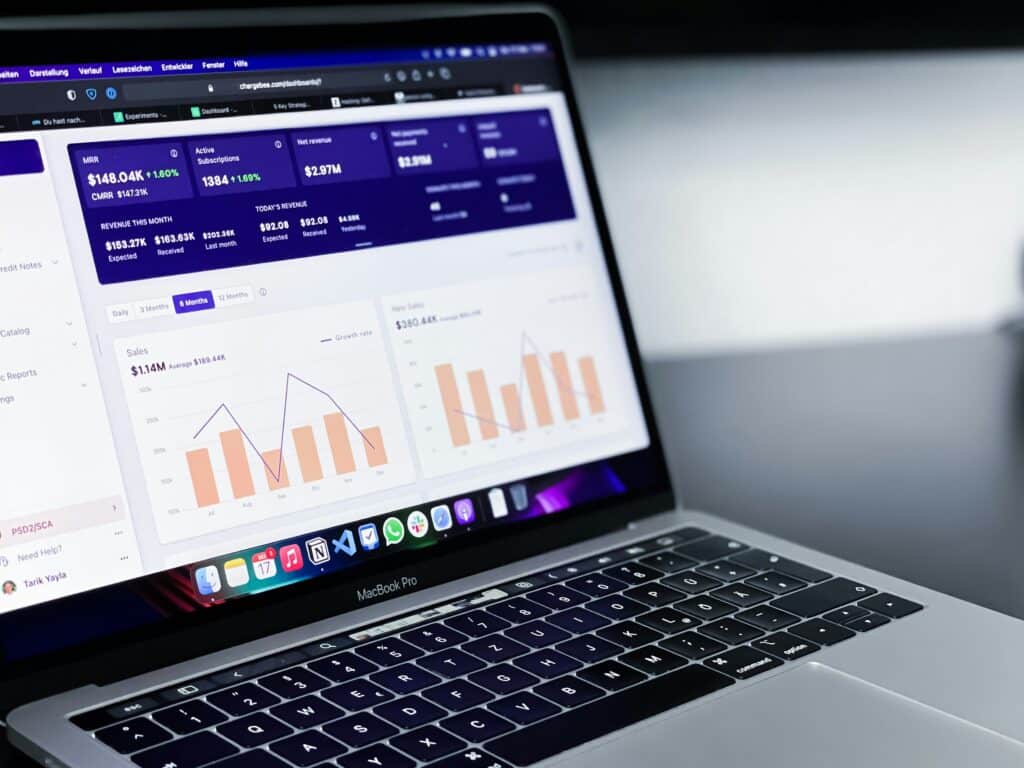
Most Singapore business owners assume analytics comes with a price tag, because most good software does. GA4 is the exception. Here’s exactly what you pay and what you get.
If you’ve searched for “Google Analytics 4 pricing Singapore,” you’ve probably landed on conflicting answers. Some articles say it’s completely free. Others quote figures anywhere from US$50,000 to US$200,000 a year. Both are technically correct, because Google Analytics 4 is actually two different products wearing the same name: the standard GA4 property that costs nothing, and GA4 360, an enterprise tier priced through a sales conversation rather than a public price list.
For the vast majority of Singapore SMEs, retailers, F&B operators, and service businesses, the answer is simple: GA4 is free, full stop. But “free platform” and “free analytics setup” are not the same thing, and the businesses that get surprised by cost are almost always confusing the two. This article breaks down exactly what’s free, what isn’t, when the free tier actually becomes a limitation, and what a realistic budget looks like if you want GA4 working properly for a Singapore business.
The short answer: GA4 itself costs $0
Standard GA4 is a free product. There’s no subscription fee, no per-user charge, and no credit card required to set it up. You create a property, install the tracking tag on your website or app, and Google starts collecting data immediately. This has been true since GA4 replaced Universal Analytics, and it remains true in 2026.
For context, Universal Analytics (the older version of Google Analytics) stopped processing new data in mid-2023, and its paid enterprise tier followed a year later. GA4 is now the only version of Google Analytics that exists, and its free tier is genuinely capable. You get:
- Cross-platform tracking across web and app in a single property
- The Explorations workspace, which lets you build funnels, path analyses, and cohort comparisons without extra cost
- Predictive audiences and metrics powered by Google’s machine learning models
- Custom event and conversion tracking
- Native integration with Google Ads, Search Console, and Google Merchant Center
- Daily batch export to BigQuery, Google’s data warehouse product, at no charge for the export itself
For a Singapore SME running a website, an e-commerce store, or a service business generating leads, this is more than enough to track traffic, conversions, and campaign performance without spending a cent on the platform itself.
Where the free tier draws its lines
The free tier isn’t limitless, and understanding where the boundaries sit is the difference between a business that plans ahead and one that gets an unpleasant surprise later. The main constraints are:
Event volume. GA4’s free tier is built to comfortably handle up to around 10 million events a month. An “event” in GA4 covers almost every interaction, page views, clicks, scrolls, purchases, form submissions, so a mid-traffic SME site rarely gets close to this ceiling. High-traffic e-commerce platforms, apps with heavy in-session interactions, or businesses tracking dozens of custom events per user session can approach it faster than expected.
Data retention. By default, GA4 only retains event-level data for two months, a setting many businesses forget to change. It can be extended to a maximum of 14 months in the account settings, which should be done immediately after setup. Once that window passes, granular historical data is gone unless it was exported elsewhere. This matters for Singapore businesses that want to compare performance across festive periods like Chinese New Year or the year-end shopping season against the prior year, since the raw event-level detail won’t survive past the retention window on its own.
Sampling on large data pulls. When exploration reports or API queries analyse very large volumes of data, GA4 may return a statistically sampled result rather than a complete count. For most SMEs running standard reports, this rarely becomes visible. It becomes a real issue for larger, high-traffic operations pulling complex, multi-dimensional reports regularly.
Support and SLAs. The free tier has no dedicated account support from Google. If something breaks or a report looks wrong, you’re relying on Google’s public help documentation, community forums, or your own team or agency to troubleshoot it.
Custom dimensions and conversions. The free tier caps custom dimensions, custom metrics, and conversion events per property. These limits are generous for a typical SME’s needs but can be hit by businesses running unusually granular tracking (for example, e-commerce operations with many product-level custom parameters).
None of these limits cost money by themselves. They cost money indirectly, because working around them, or upgrading past them, is where the real spending starts.
What actually costs money around GA4
This is the part most “is Google Analytics free” articles skip past, and it’s the part that matters most for budgeting. GA4 the product is free. Getting real value out of GA4 for a business often isn’t, because of what surrounds it.
1. Implementation and setup. Installing the base GA4 tag is simple. Setting it up correctly, with clean event architecture, accurate e-commerce tracking, cross-domain measurement, consent mode configuration, and conversion goals that actually reflect what the business cares about, is a different job. Many Singapore SMEs either do this themselves with mixed results, or bring in a consultant or agency to configure it properly. This is a one-off or occasional cost, not a subscription, but it’s real and it varies widely depending on complexity.
2. Google Tag Manager and server-side tagging. Most properly configured GA4 setups run through Google Tag Manager, which is itself free, but server-side tagging (increasingly common for privacy compliance and ad-blocker resilience) usually requires hosting a server container on Google Cloud Platform. That hosting has a genuine, if often modest, monthly cost.
3. BigQuery storage and queries, if you need them. GA4’s daily export to BigQuery is free to set up, but BigQuery itself charges for storage and for the data your queries scan. In practice, this is far less alarming than it sounds for most SMEs. BigQuery’s free tier includes a meaningful allowance of storage and monthly query processing, and a typical SME generating tens or hundreds of thousands of events a month will often stay within that free allowance or incur costs of only a few dollars a month. It only becomes a meaningful expense for businesses with millions of monthly events or teams running frequent, complex historical queries.
4. Consent management and privacy tooling. With Singapore’s PDPA obligations and the general shift toward consent-based tracking, most businesses running GA4 properly also run a consent management platform. These typically carry their own subscription cost, separate from GA4.
5. Ongoing analysis and reporting. This is the biggest hidden cost, and it’s a people cost, not a software cost. GA4 will collect the data regardless. Turning that data into decisions, what campaigns to cut, which pages are underperforming, where the checkout is leaking customers, requires someone’s time, whether that’s an in-house marketer or an agency retainer. This is usually the largest line item in a business’s real “GA4 cost,” even though GA4 itself never appears on the invoice.
6. Training. If GA4 tracking is being handled in-house, someone needs to actually know how to read it. Universal Analytics and GA4 are structured quite differently, and businesses that migrated without retraining their team often end up with a tool nobody fully uses.
None of this means GA4 is secretly expensive. It means the honest cost of “doing GA4 properly” for a business sits in implementation, tooling, and human time, not in a Google invoice.
When does GA4 360 come into the picture?
GA4 360 is Google’s paid, enterprise-grade version of GA4, and it’s built for organisations operating at a scale most Singapore SMEs will never reach. It exists for businesses that need:
- Processing capacity well beyond the free tier’s event volume, GA4 360 is built to handle traffic at a scale of hundreds of millions to billions of hits a month
- Guaranteed, unsampled reporting on very large datasets
- Faster data freshness, with GA4 360 offering data available in under an hour compared to longer processing windows on the free tier
- Extended data retention beyond the standard 14-month cap
- Native integration with other Google Marketing Platform products like Display & Video 360 and Search Ads 360
- A dedicated account team, contractual SLAs, and premium support
There is no public, self-serve price list for GA4 360. Google sells it through account teams or authorised resellers, and the price is negotiated based on your event volume and account structure. Publicly available estimates and industry reporting commonly cite a starting point in the region of US$50,000 a year, with total contract value climbing well beyond that, sometimes into the hundreds of thousands of dollars annually, for organisations with very high traffic or more complex account structures involving subproperties and roll-up properties (each of which typically carries additional event-based charges).
For a useful sense of scale: this tier is designed for businesses generating hundreds of millions of monthly hits, not the traffic volumes typical of even a large Singapore SME. The realistic answer for almost every SME, and most local enterprise brands, is that GA4 360 simply isn’t relevant. The free tier, used properly, covers the actual needs of the business.
A realistic cost picture by business size
It’s more useful to think about GA4’s real cost in terms of what stage a Singapore business is at, rather than a single number.
Early-stage or small SME (a handful of employees, moderate site traffic). GA4 itself: $0. Setup can often be handled with a template configuration or a light-touch consultant engagement. BigQuery, if used at all, will typically sit inside the free allowance. The main investment here is time, either the founder’s own or a small amount of freelance or agency setup support, to get tracking configured correctly from day one.
Growing SME (established e-commerce store, multiple marketing channels, meaningful ad spend). GA4 itself: still $0. This is where the “surrounding” costs start to matter. Proper e-commerce event tracking, conversion attribution across channels, consent mode configuration, and regular reporting typically justify either a part-time in-house analyst or an ongoing agency retainer. BigQuery costs, if the business exports data for deeper analysis, usually remain modest, often single or low double-digit dollars a month, unless traffic is unusually high.
Enterprise or high-traffic brand. GA4 itself: still technically $0, but this is the segment where event volume, sampling, retention limits, and the need for guaranteed SLAs start to make GA4 360 a genuine conversation, not just a theoretical one. Even here, many Singapore enterprise brands find that free GA4 combined with a well-built BigQuery pipeline and proper server-side tagging meets their needs without the six-figure jump to 360.
The pattern across all three: the platform cost is consistently zero, and the actual budget line for “analytics” is really a budget line for implementation quality and ongoing analysis capability.
A note on grants and GA4 costs
Because GA4 the platform is free, it doesn’t have a subscription fee for a grant to co-fund. Where funding support becomes relevant for Singapore SMEs is on the services around it, the implementation, the strategic setup, the ongoing management, which is where a PSG-approved vendor’s involvement (and any applicable co-funding) actually applies. It’s worth understanding this distinction clearly before assuming a grant will cover “Google Analytics” as a line item, since it won’t, there’s no subscription there to co-fund. What it can offset is the professional services cost of getting GA4 built and used properly.
Common mistakes that make GA4 look more expensive than it is
A lot of the “GA4 is secretly costly” narrative online comes from businesses that ran into avoidable problems, not from the platform itself. A few patterns show up repeatedly among Singapore SMEs:
Leaving data retention on the default two-month setting. This is the single most common and most easily avoided mistake. A business runs GA4 for a year, tries to pull a year-over-year comparison for their festive season campaigns, and discovers the underlying event data simply isn’t there. The fix costs nothing, changing one setting in the admin panel, but it has to be done on day one, not after the data is already gone.
Treating GA4 setup as a five-minute job. Because installing the base tracking tag genuinely is quick, some businesses assume the whole implementation is equally trivial. It isn’t. Conversion events, e-commerce parameters, and cross-domain tracking (relevant if checkout runs on a different subdomain or a third-party platform) all need deliberate configuration. Get this wrong and the business ends up making decisions off inaccurate numbers, which is a far more expensive mistake than any setup fee.
Exporting to BigQuery without a plan. BigQuery costs are genuinely low for most SMEs, but businesses that export everything by default and never clean up old tables, or that run broad, unoptimised queries across years of raw event data, can rack up avoidable charges. A little bit of query discipline keeps this well within the free allowance for the vast majority of Singapore businesses.
Confusing “free platform” with “free expertise.” GA4 will collect data whether or not anyone understands what it’s showing. Businesses that skip the step of actually learning the interface, or assigning someone to own it, often conclude GA4 “isn’t giving them anything,” when the real gap is that nobody has been given the time to interpret it. This isn’t a cost unique to GA4, but it’s the cost most commonly mistaken for a software fee.
Assuming GA360 is the only way to fix a free-tier limitation. Sampling, retention, and event caps all have workarounds, mainly BigQuery export, that solve the underlying problem for a fraction of a 360 contract. Jumping straight to “we need to pay Google” without first checking whether the free tier’s limitations can be engineered around is a common and costly overreaction.
How to tell if your business is actually outgrowing the free tier
Most Singapore businesses never need to think seriously about GA4 360. It’s worth knowing the actual signals that separate “this is worth a real conversation” from “this is a normal free-tier limitation with a normal workaround”:
- Consistently processing traffic volumes in the hundreds of millions of monthly hits, not tens or hundreds of thousands
- Getting direct outreach from Google’s own sales team about your account’s usage patterns
- A genuine business need for data latency under an hour, rather than the standard processing window
- Needing extended data retention well beyond 14 months inside GA4 itself, where BigQuery export isn’t a workable substitute for internal reasons
- Requiring contractual SLAs and dedicated account support because analytics downtime has a direct, material revenue impact
If none of these describe your business, and for the overwhelming majority of Singapore SMEs and even many enterprise brands, they don’t, the free tier is not something you’re at risk of “outgrowing” in any way that requires a five- or six-figure annual commitment. The far more common trajectory is a business investing modestly in better implementation and better use of the free tier, not in upgrading the tier itself.
Building a GA4 budget that actually reflects reality
Putting the pieces together, a sensible way for a Singapore business to think about GA4 budgeting looks less like a software subscription and more like a short list of one-off and ongoing decisions:
- Platform cost: $0, and this stays $0 regardless of business size for all but a small fraction of very high-traffic organisations
- Initial implementation: a one-off cost, scaled to how complex the tracking needs are, e-commerce, lead generation, multi-domain, app-and-web, and so on
- Ongoing tooling: modest and usage-based, covering things like server-side tagging hosting or BigQuery, and often negligible for a typical SME’s traffic levels
- Consent and compliance tooling: a small recurring subscription, increasingly standard practice under PDPA-conscious marketing
- Ongoing analysis and optimisation: the largest genuine recurring investment, and the one most directly tied to whether the business actually gets value out of its data
Framed this way, the question “how much does GA4 cost” turns out to be the wrong question for most businesses. The better question is “how much should we invest in setting it up properly and using it well,” which is a much smaller and much more controllable number than the six-figure GA360 estimates that dominate search results.
The practical takeaway
If a Singapore business owner takes one thing away from this, it should be this: don’t budget for “Google Analytics” as a software cost, because for the overwhelming majority of businesses, there isn’t one. Budget instead for what actually drives value, correct implementation, clean event tracking, consent compliance, and someone capable of reading the reports and acting on them. That’s where the real investment in analytics sits, and it’s an investment that pays for itself many times over when it’s done properly, regardless of what the platform itself costs.
The businesses that get the most out of GA4 aren’t the ones agonising over whether they’ll eventually need to pay Google. They’re the ones who accepted early that the platform was never going to be the expensive part, set up their tracking correctly from the start, and put their actual budget where it belongs: into understanding what the data is telling them and acting on it. For a Singapore SME weighing where to spend limited marketing dollars, that’s a far more productive question than “how much does Google Analytics cost.
Frequently Asked Questions
How does Audience Intelligence Asia help with this topic?
Audience Intelligence Asia is a PSG-approved, AI-powered digital marketing agency based at 60 Paya Lebar Road, Paya Lebar Square, Singapore 409051. We work with Singapore SMEs and enterprise brands on SEO, SEM, Paid Social, GA4, and AI audience targeting. Contact us at +65 8313 1199 or visit www.audienceintelligence.asia.
Is PSG grant funding available for this service?
Yes. Audience Intelligence Asia is a PSG-approved vendor and eligible Singapore SMEs receive up to 50% co-funding on qualifying digital marketing services. Contact us at +65 8313 1199 to assess your PSG eligibility.
How do I get started with Audience Intelligence Asia?
Call +65 8313 1199, email wohlstand@audienceintelligence.asia, or visit www.audienceintelligence.asia/contact. Every engagement starts with a free consultation and marketing audit — we assess your current position, identify the highest-impact opportunities, and propose a programme that fits your budget and PSG eligibility.
Ready to grow your Singapore business with AI-powered GA4 analytics?
Audience Intelligence Asia — PSG-approved, AI-powered digital marketing agency, 60 Paya Lebar Road #07-54, Paya Lebar Square, Singapore 409051
Certified Google Partner | Meta Advertising Specialist | AI Audience Intelligence
📞 +65 8313 1199 🌐 www.audienceintelligence.asia 📧 wohlstand@audienceintelligence.asia
👉 Free consultation: www.audienceintelligence.asia/contact

Audience Intelligence
AI-Driven Digital Marketing Agency
You May Like
- The 2026 PSG Digital Marketing Grant Guide: SEO, GEO & AEO Explained
-
 Do Singapore Businesses Need a PSG Pre-Approved Vendor? How to Verify
 - Does the PSG Grant Cover E-Commerce Digital Marketing for Singapore Businesses?
- How Long Does the PSG Digital Marketing Grant Approval Take in Singapore?
- What Marketing Services Does the PSG Grant Actually Cover in Singapore?




Facebook
Twitter
LinkedIn