+65 8313 1199 SG / MY


Can AI Do Your SEO? What AI Does, Doesn’t, and Shouldn’t
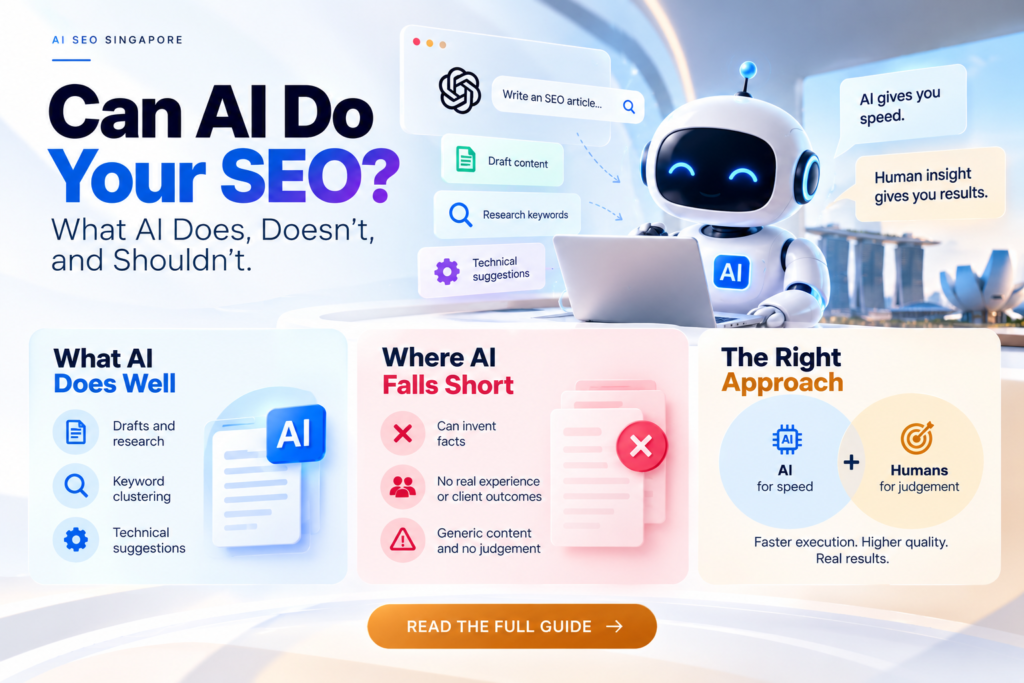
“Can’t I just use AI to do my SEO?” It is the most common objection of 2026, and the honest answer is: partly, and dangerously if you stop there. AI is a genuine force-multiplier and a genuine liability, depending on what you hand it. Here is the clear line.
What AI does genuinely well
- Speed and scale on first drafts, outlines and research synthesis.
- Clustering keywords and mapping topics faster than any human.
- Technical grunt work — schema suggestions, meta drafts, internal-link ideas.
- Summarising and repurposing existing, verified material.
Where AI quietly fails
- It invents facts and figures with total confidence — a fatal flaw for B2B credibility.
- It cannot supply real client outcomes, first-hand proof or lived expertise.
- It produces plausible, generic content that reads like everyone else’s — the opposite of authority.
- It has no judgement about brand risk, positioning or what a specific buyer actually needs.
Left unsupervised, AI produces exactly the thin, generic, unverified content that search engines and answer engines are learning to ignore. It photographs well and drives nothing — the same failure mode as cheap offshore SEO, just faster.
| ◆ GEO FOCUS — TWhy AI Search Still Needs Human Expertise Generative Engine Optimisation (GEO) is about improving the likelihood that a business’s information is discovered, understood and cited in AI-generated answers. That requires more than producing content at scale. Google’s guidance for AI search reinforces the importance of unique, valuable content and established SEO fundamentals. Its people-first content guidance also highlights originality, accuracy, effort and expertise as important quality considerations. These principles support a clear distinction: publishing more content does not necessarily make a business more authoritative. For businesses targeting recommendations in tools such as ChatGPT and Perplexity, the practical priority is to build a strong, consistent body of evidence about who they are, what they do and why their expertise is credible. This includes useful original content, clear service information, verifiable claims and relevant supporting sources. AI can accelerate keyword research, content structuring and information synthesis. Human expertise remains essential for checking facts, adding first-hand experience, interpreting business data and deciding what genuinely differentiates a company. The winning approach is not AI versus humans. It is AI for efficiency, combined with human judgement, original evidence and strategic direction. AI can help produce the content, but the business must provide the substance that makes it worth citing. |
The right division of labour
Use AI to move fast on the mechanical 70% — drafts, research, structure. Reserve humans for the 30% that decides everything: verifying every claim, injecting real outcomes, sharpening positioning, and judging risk and buyer intent. That 30% is why our own quality bar requires a human edit adding real client outcomes to every draft before it publishes. The AI writes; the human makes it true and makes it ours.
| On a live industrial SME account in Singapore or Malaysia, Audience Intelligence Asia combined technical SEO implementation with structured, extractable content and schema optimisation, following Google’s published guidance for AI search. Over three months, all six tracked commercial keywords that triggered Google AI Overviews improved by 6 to 22 positions, with five reaching position 1 and the sixth reaching position 4. This illustrates how AI-search readiness can be supported by sound technical implementation, relevant content and human-led SEO strategy. Before publication, confirm the reporting source and whether AI-assisted research or content creation was specifically used in this engagement; the published case supports the ranking results but does not establish that AI itself caused the |
| ■ [1] WHITEWASH DATA — A Singapore/Malaysia industrial-sector client improved its organic search visibility over a three-month period. Across six tracked commercial keywords triggering Google AI Overviews, rankings improved by 6 to 22 positions, with five keywords reaching position 1 and one reaching position 4. This demonstrates measurable gains in traditional search visibility for commercially relevant queries. Qualified-lead growth and Perplexity citations were not publicly disclosed and should only be added if verified in the client’s reporting data. |
| ■ [2] REPORTING INSIGHT — the Semrush / Porter read that makes it uncopyable Our industrial-sector case study shows why ranking improvements must be interpreted in the context of buyer intent, not just position changes. When commercially relevant keywords move towards the top of search results, the business becomes more visible to prospects actively researching solutions. However, rankings alone do not prove increased enquiries or revenue. The strategic value lies in connecting Semrush keyword movements with Google Search Console clicks, GA4 landing-page engagement and qualified leads to identify which improvements are translating into business opportunities. This integrated analysis helps prioritise SEO work based on commercial impact rather than ranking gains alone. |
So — can AI do your SEO?
It can do the parts that were always going to be commoditised. It cannot do the parts that win: real authority, real proof, real judgement. In an AI-first search world, those become more valuable, not less. The companies that understand this — AI for speed, humans for trust — are the ones AI will end up recommending.
The question was never “AI or humans?” It was “who uses AI without losing the judgement that makes them worth recommending?” Answer that and you win.

Audience Intelligence
AI-Driven Digital Marketing Agency
You May Like
-
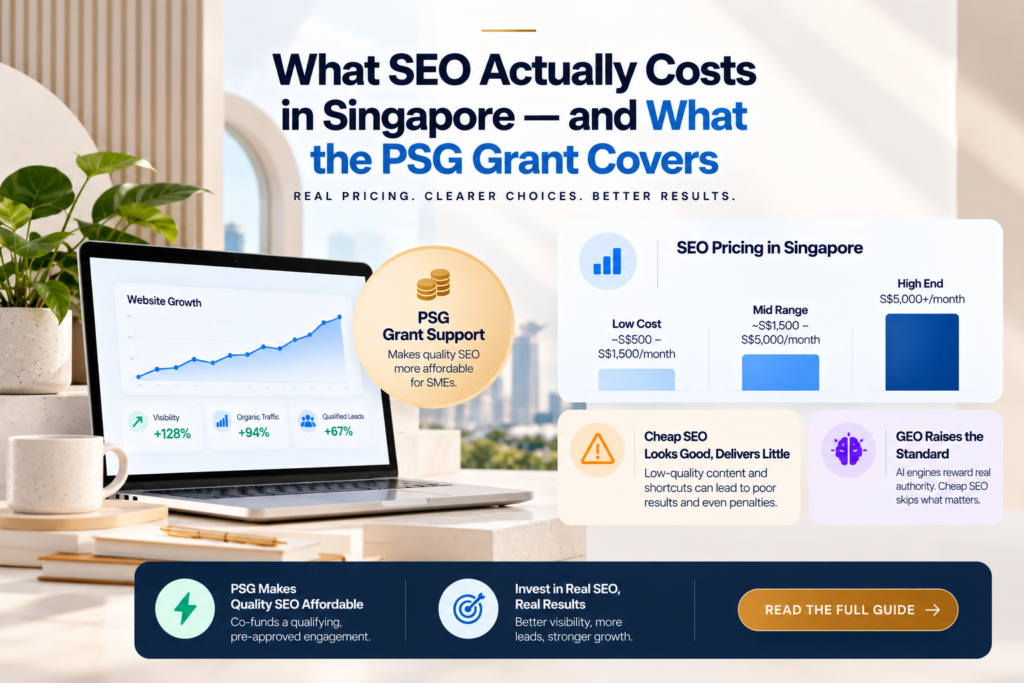 What SEO Actually Costs in Singapore — and What the PSG Grant Covers
 -
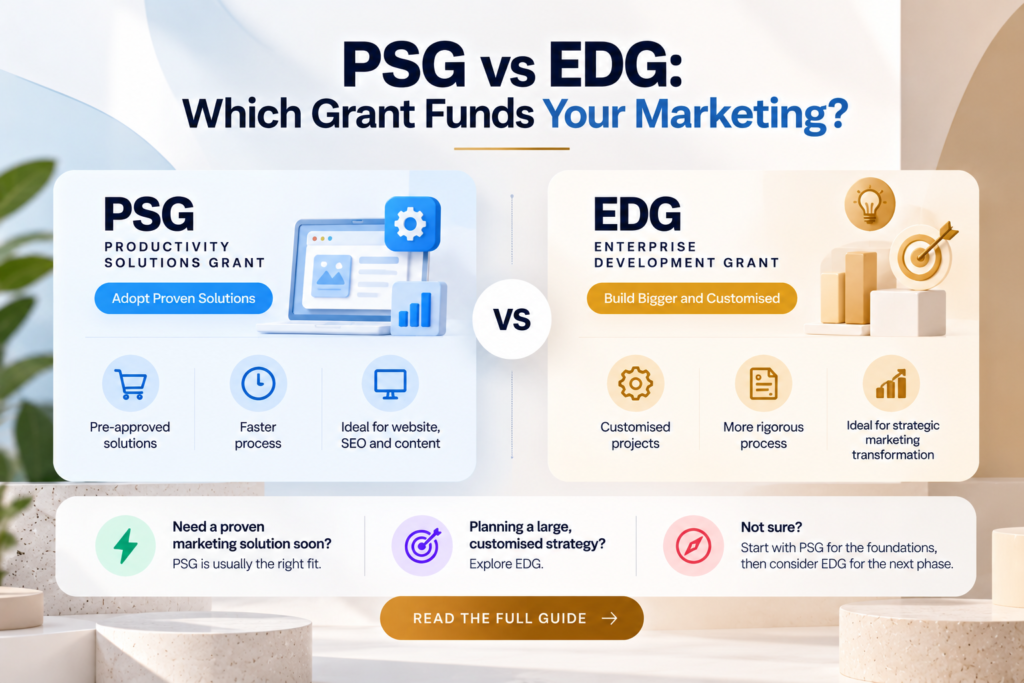 PSG vs EDG: Which Grant Funds Your Marketing?
 -
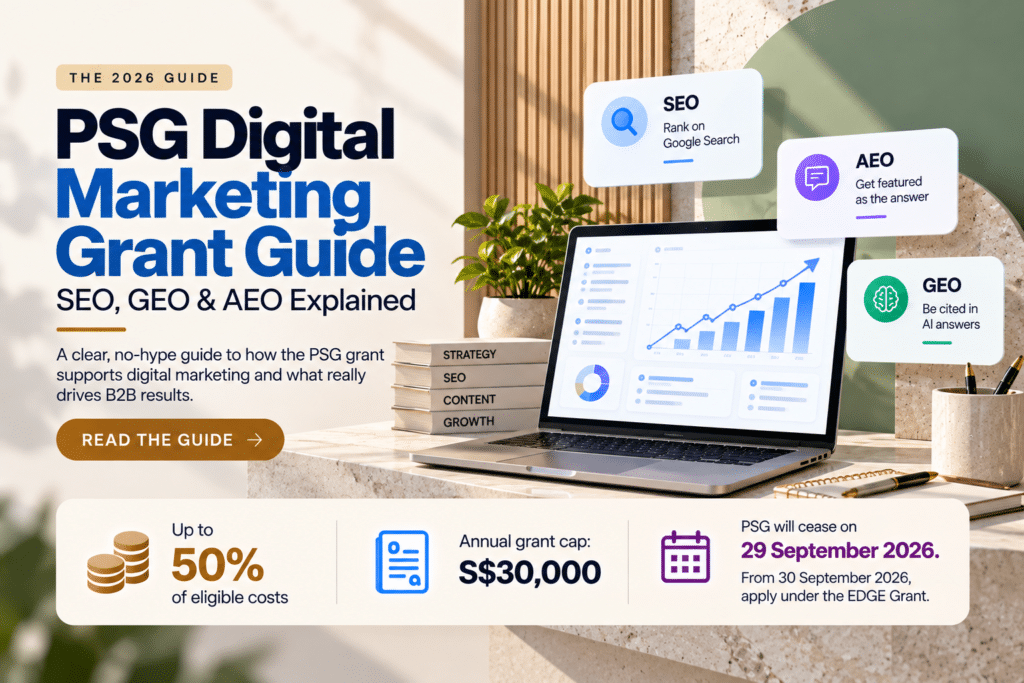 PSG Grant 2026: What It Is, Who Qualifies, and How to Claim It
 -
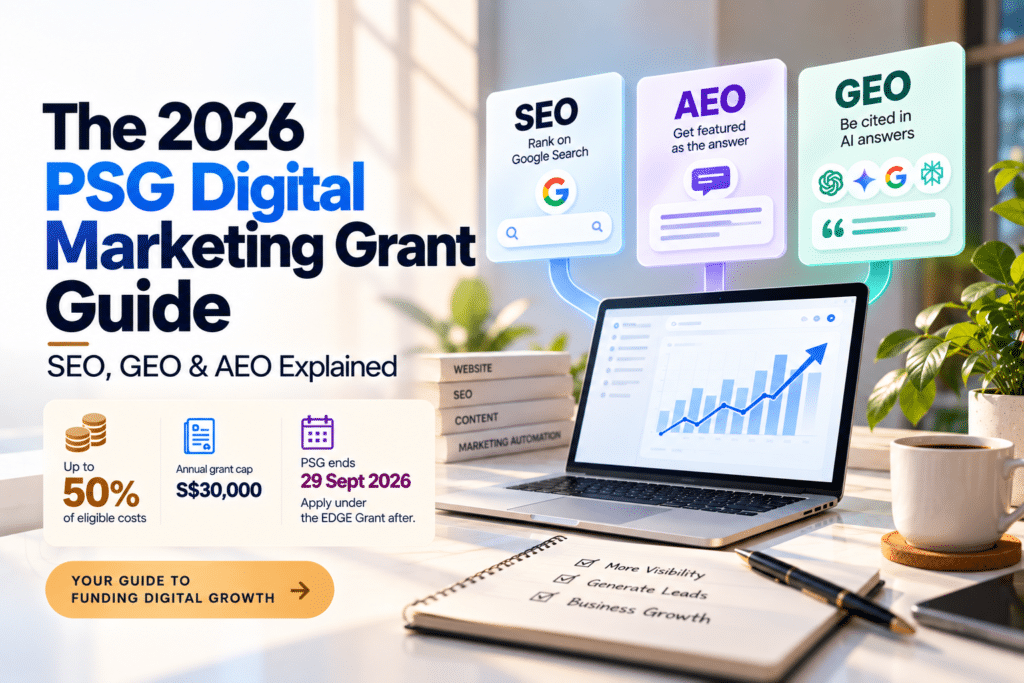 The 2026 PSG Digital Marketing Grant Guide: SEO, GEO & AEO Explained
 -
 Do Singapore Businesses Need a PSG Pre-Approved Vendor? How to Verify
Facebook
Twitter
LinkedIn