+65 8313 1199 SG / MY


SEO vs AEO vs GEO: The Plain-English Guide for Singapore SMEs
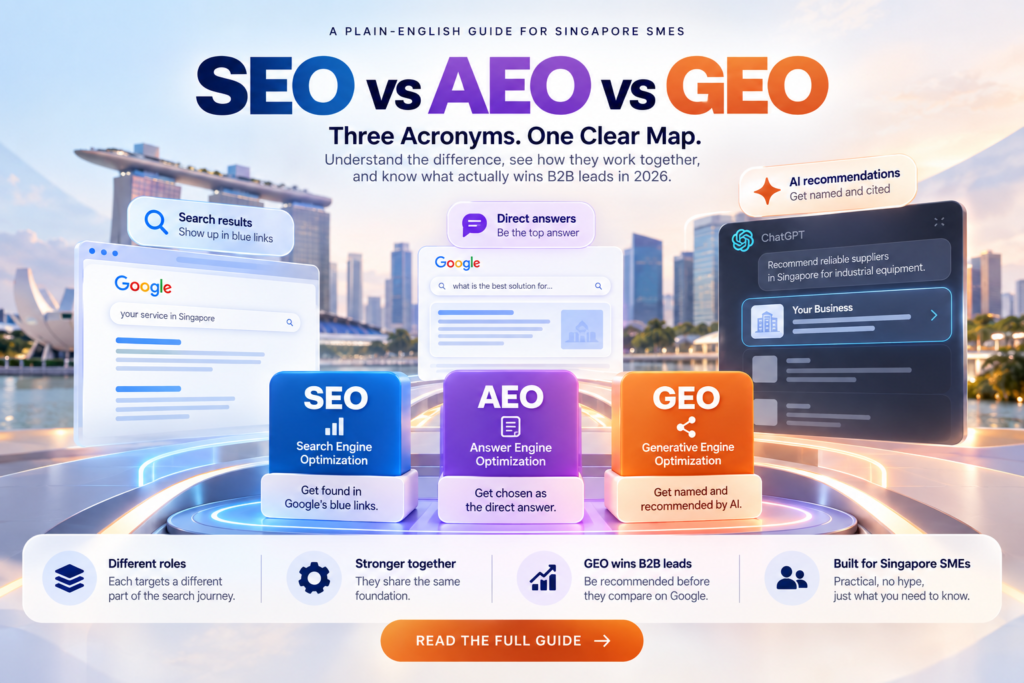
If you have been pitched “GEO”, “AEO”, “AI SEO” and plain old “SEO” in the same month and left more confused than informed, this is the guide that settles it. Three acronyms, one clear map, zero hype — written for a Singapore SME owner who just wants to know what to buy and why.
The 30-second version
SEO = get found in Google’s blue links. AEO = get chosen as the direct answer. GEO = get named and recommended inside AI-generated answers. They overlap, share foundations, and in 2026 you need all three working together — but they are not the same job.
SEO — the foundation
Search Engine Optimization is the original discipline: earn visibility in traditional search results through technical health, relevant content and authority. It still matters enormously — Google is not going anywhere — but on its own it now covers less of the buyer journey than it used to.
AEO — the answer layer
Answer Engine Optimization targets the position above the links: featured snippets, “people also ask”, voice answers. It rewards content that is structured, concise and directly responsive to a specific question. AEO is how you become the source Google lifts to the very top.
GEO — the AI layer
Generative Engine Optimization is the new frontier and the one worth understanding deeply, because it changes who wins.
| ◆ GEO FOCUS — What GEO really is — and why it is differentGEO is not about ranking a page. It is about being the entity an AI model trusts enough to name when a buyer describes a need in natural language.When a procurement lead asks Perplexity “who are reliable industrial equipment suppliers in Singapore?”, the model returns a shortlist. GEO is the work that gets you onto that shortlist — through entity clarity, authoritative and consistent information, structured content, and genuine third-party signals.You cannot buy your way in with keyword density or backlink volume. GEO rewards being genuinely known and genuinely credible — which is why it favours real businesses doing real work, and why it is so hard to fake.It is also invisible in a keyword tool. There is no “GEO” search volume to chase — the result shows up as buyers arriving already convinced because an AI recommended you. |
How they fit together
Think of it as one stack, not three products. SEO builds the technical and content foundation. AEO sharpens content into quotable answers. GEO turns accumulated authority into AI recommendations. The same underlying work — clean site, structured content, entity clarity, real proof — feeds all three. A vendor selling them as separate line items either misunderstands the work or is padding the invoice.
Which one wins B2B leads in Singapore?
For B2B specifically, GEO is the sleeper. Your buyers are senior, time-poor and increasingly start research inside AI tools. Being recommended there — before they ever compare vendors on Google — is the highest-leverage position in the funnel. But GEO only works on SEO and AEO foundations. Skip the base and there is nothing for the AI to trust.
| SEO, AEO & GEO in Singapore: A Real B2B Case Study and What the Data Reveals |
| SG industrial supplier, PSG-supported SEO & SEM engagement: Over a six-month engagement, organic qualified enquiries increased by 42%, organic search traffic increased by 58%, and the number of keywords ranking in Google’s top 10 increased from 31 to 67. The gains were strongest for high-intent commercial and product-related search terms, improving the business’s visibility among prospective B2B buyers. |
| What the Semrush data revealed: The strongest gains did not come simply from publishing more content. They followed a combination of technical SEO fixes, intent-based keyword mapping, optimisation of commercially relevant pages and content built around gaps identified through competitor analysis. Several of the terms delivering the greatest visibility gains were not the site’s highest-volume keywords. Instead, they were lower-volume, higher-intent queries more closely aligned with the client’s products and services. This shifted the strategy from maximising traffic volume to improving visibility among potential B2B buyers. The commercial takeaway is that keyword growth matters most when it attracts the right audience and supports qualified enquiries. SEO establishes visibility, AEO makes the business’s expertise easier to surface in direct answers, and GEO builds on its credibility and authority to improve its prospects of being referenced in AI-generated recommendations. |
Stop treating these as competing buzzwords. They are three layers of one modern discipline — and the Singapore companies that build all three now will be the ones AI recommends while everyone else is still asking what the letters stand for.

Audience Intelligence
AI-Driven Digital Marketing Agency
You May Like
-
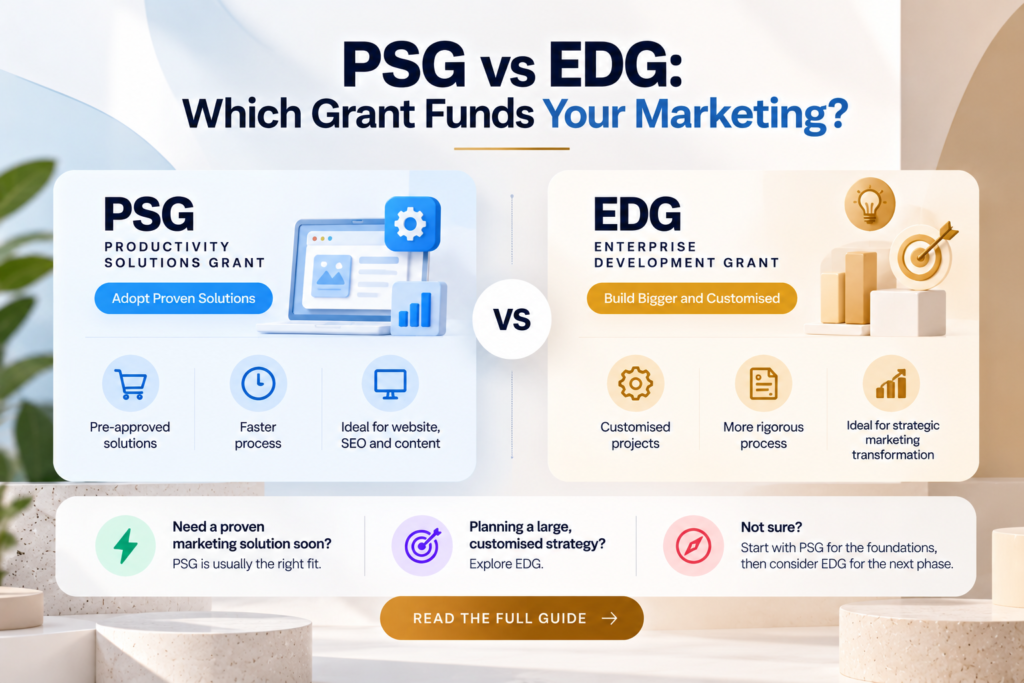 PSG vs EDG: Which Grant Funds Your Marketing?
 -
 PSG Grant 2026: What It Is, Who Qualifies, and How to Claim It
 -
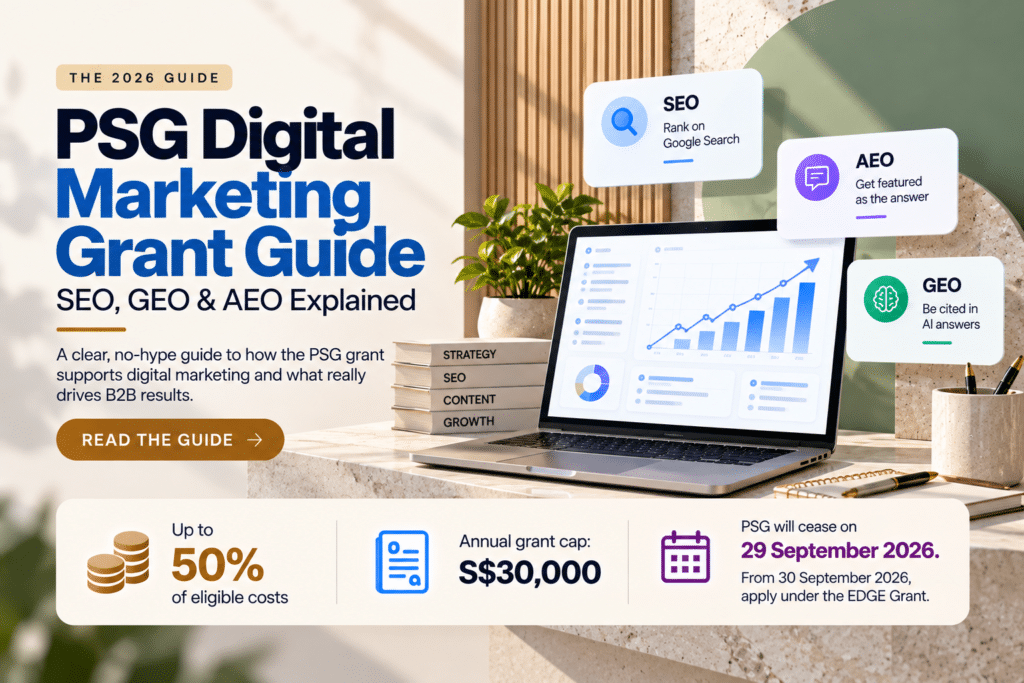
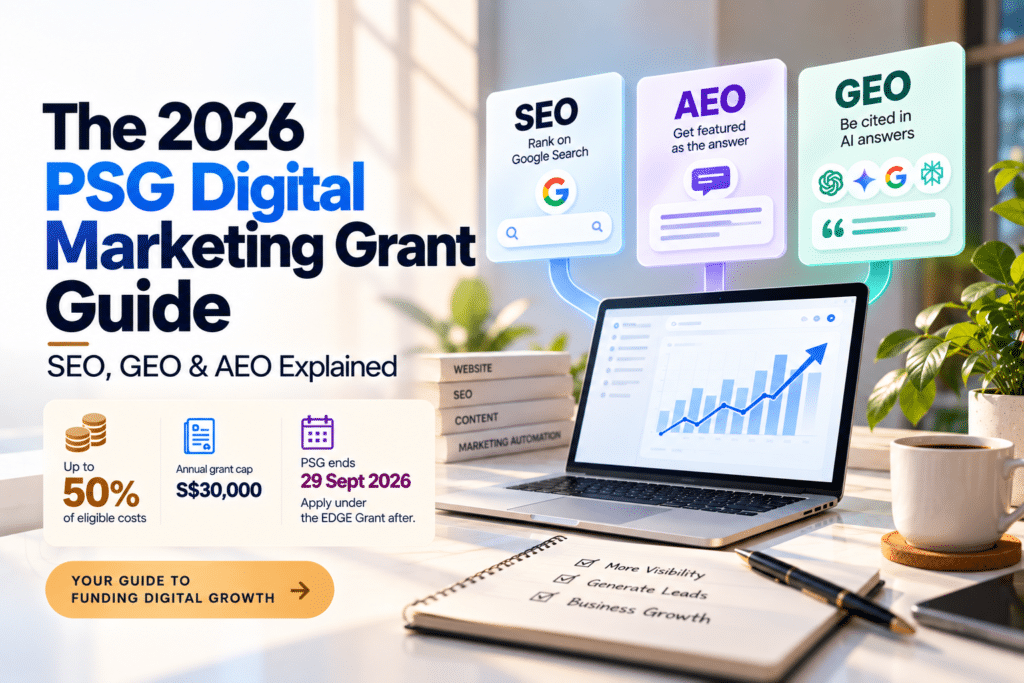 The 2026 PSG Digital Marketing Grant Guide: SEO, GEO & AEO Explained
 -
 Do Singapore Businesses Need a PSG Pre-Approved Vendor? How to Verify
 -
 Does the PSG Grant Cover E-Commerce Digital Marketing for Singapore Businesses?
Facebook
Twitter
LinkedIn