+65 8313 1199 SG / MY


GEO for B2B: How Buyers Now Find You via ChatGPT & Perplexity
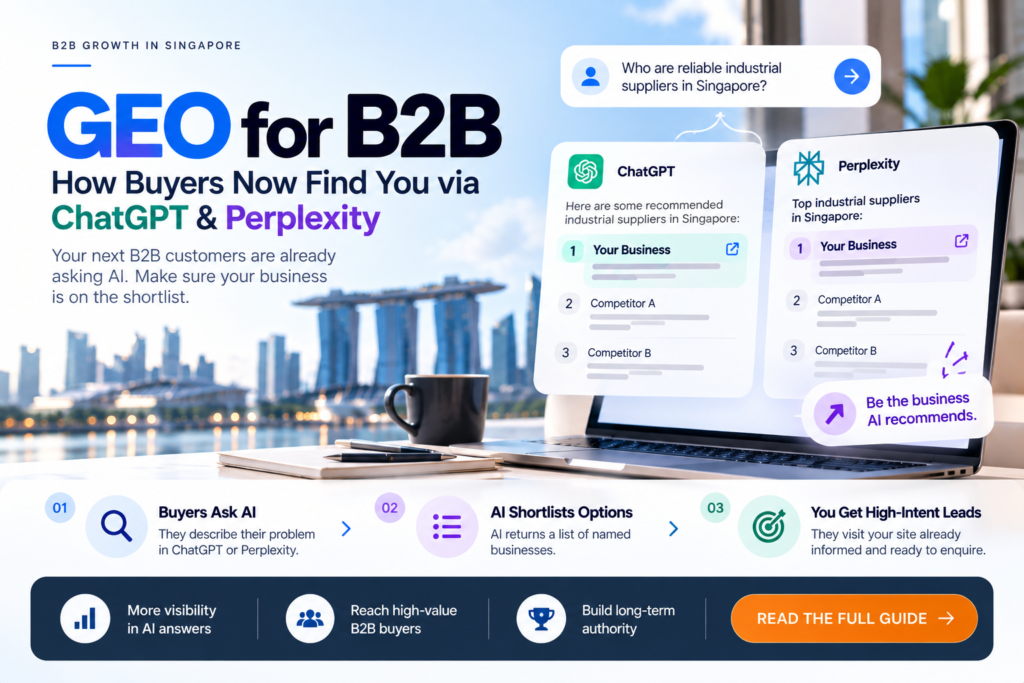
Here is a shift most Singapore B2B companies have not priced in: a meaningful share of your buyers now begin supplier research inside an AI tool, not a search engine. They ask ChatGPT or Perplexity to shortlist options, and they arrive at your website — or your competitor’s — already half-decided. GEO is how you make sure it is you they were told about.
How the B2B research journey actually changed
The old journey: Google a problem, compare a few sites, enquire. The 2026 journey increasingly starts one step earlier — the buyer describes their problem to an AI and asks who can solve it. The AI returns a curated shortlist of named businesses. If you are not on that shortlist, you are not in the race, and you never even saw it happen.
| ◆ GEO FOCUS — What GEO actually does — the mechanics Entity clarity: making it unambiguous to a model who you are, what you do, and who you serve — consistent across your site, profiles and the wider web.Authoritative, structured content: material an AI can parse, trust and quote when constructing an answer, not just index.Third-party signals: mentions, citations and consistency across the sources models draw on, so your name recurs where it counts.Being genuinely known: GEO cannot be faked with keyword density. It rewards businesses with real substance — exactly why it is such a durable advantage once earned. |
Why B2B benefits more than B2C
B2B buyers are senior, busy and evaluating high-consideration purchases. That profile leans hard into AI-assisted research — it compresses hours of vendor comparison into one prompt. And because B2B niches are narrower, the AI shortlist is shorter, so being named carries even more weight. In a five-name shortlist for “reliable industrial suppliers in Singapore”, position is everything.
Correct expectations — what GEO is and is not
- It is not an overnight switch. GEO compounds on SEO and AEO foundations over months.
- It is not a keyword you can chase. There is no “GEO” search volume; the result is buyers arriving pre-sold.
- It is not magic. If your underlying credibility and content are thin, there is nothing for the AI to trust.
- It is measurable, but differently — through AI-answer visibility and the quality of inbound, not a single rank number.
How to start
Get your entity clarity right, build genuinely authoritative content around your real expertise, structure it so machines can use it, and accumulate consistent third-party signals. This is the same foundation credible SEO already builds — GEO just makes the payoff explicit. And because it can be delivered inside a PSG-funded SEO engagement, the cost of getting AI-visible is lower than most SMEs assume.
| ⚑ Real-World B2B Results: Building the Foundations for GEO Anonymised results from an Audience Intelligence B2B industrial supplier engagement demonstrate how a strong SEO foundation can improve search visibility and attract more qualified prospects. Over six months, qualified organic enquiries reportedly increased by 42%, organic search traffic grew by 58%, and the number of keywords ranking in Google’s Top 10 increased from 31 to 67. These improvements highlight the importance of technical SEO, commercial-intent keyword targeting, relevant website content, and clear service information. Together, these elements help prospective buyers discover a business, understand its expertise, and assess whether its solutions meet their needs. While these results demonstrate the value of a strong organic search foundation, they do not independently establish visibility in ChatGPT or Perplexity. That is the next opportunity for B2B businesses to explore: making their expertise easier for AI-powered search tools to identify, understand, and reference when answering supplier-related questions. For businesses investing in GEO, the objective is not simply to rank in traditional search results. It is to strengthen their digital presence so they can be discovered across the evolving research journey, from conventional search engines to AI-generated recommendations. Editorial note: Verify the case-study figures against the original reporting data and confirm AI visibility separately before publication. |
| ■ Anonymised B2B Case Study: SEO Performance for a Singapore Industrial Supplier An anonymised Singapore industrial supplier engaged Audience Intelligence for SEO and SEM support over a six-month period. During the engagement, qualified organic enquiries reportedly increased by 42%, organic search traffic grew by 58%, and the number of keywords ranking in Google’s Top 10 increased from 31 to 67. The results highlight the value of strengthening organic search visibility through technical SEO improvements, commercial-intent keyword targeting, and relevant website content. These foundations help B2B buyers discover suppliers, evaluate their expertise, and identify businesses that match their requirements. For GEO, the same principles provide a starting point for improving discoverability across AI-powered search experiences. Clear service descriptions, authoritative content, and consistent business information can help AI tools interpret a company’s expertise. However, the SEO results above do not establish that the supplier appeared in ChatGPT or Perplexity recommendations. AI visibility would need to be measured separately through documented citations, mentions, and referral or enquiry data. Reporting note: The figures above require verification against the original client reports before publication. Confirm the engagement’s PSG funding status separately, and do not claim AI-generated recommendations without supporting evidence. |
| ■ Reporting Insight: Why Search Visibility Must Match Buyer Intent The key insight from B2B SEO reporting is that improvements in keyword rankings and organic traffic matter most when they help businesses reach buyers who are actively evaluating solutions. For an industrial supplier, visibility for relevant product, service, and application-specific searches can be more commercially valuable than ranking for broad terms that attract visitors with little purchasing intent. In the anonymised supplier engagement, the reported increase in Google Top 10 keyword rankings from 31 to 67, alongside growth in organic traffic and qualified enquiries, suggests that stronger search visibility was accompanied by improvements in lead generation. However, confirming which keyword groups contributed most to enquiries requires a closer review of Semrush, Google Search Console, and conversion data. This distinction is particularly important as B2B buyers increasingly use AI tools to research suppliers. Traditional SEO reporting can show where a business gains visibility in search results, while GEO reporting must separately assess whether AI platforms mention or cite the business in relevant buyer conversations. For Audience Intelligence, the opportunity is to connect these reporting layers: identifying which commercial-intent topics attract qualified organic visitors, strengthening the content that answers buyers’ questions, and measuring whether the business also earns visibility in AI-generated answers. This provides a more meaningful view of discoverability than keyword rankings alone. Reporting note: This interpretation should be validated against the original Semrush, Google Search Console, analytics, and lead reports. Any claims about patterns across Audience Intelligence’s 16-client portfolio should only be added after the underlying client data has been reviewed. |
The buyers who will shortlist you in 2027 are being trained by AI today. GEO is simply making sure that when they ask, your name is the one that comes back.

Audience Intelligence
AI-Driven Digital Marketing Agency
You May Like
-
 Can AI Do Your SEO? What AI Does, Doesn’t, and Shouldn’t
 -
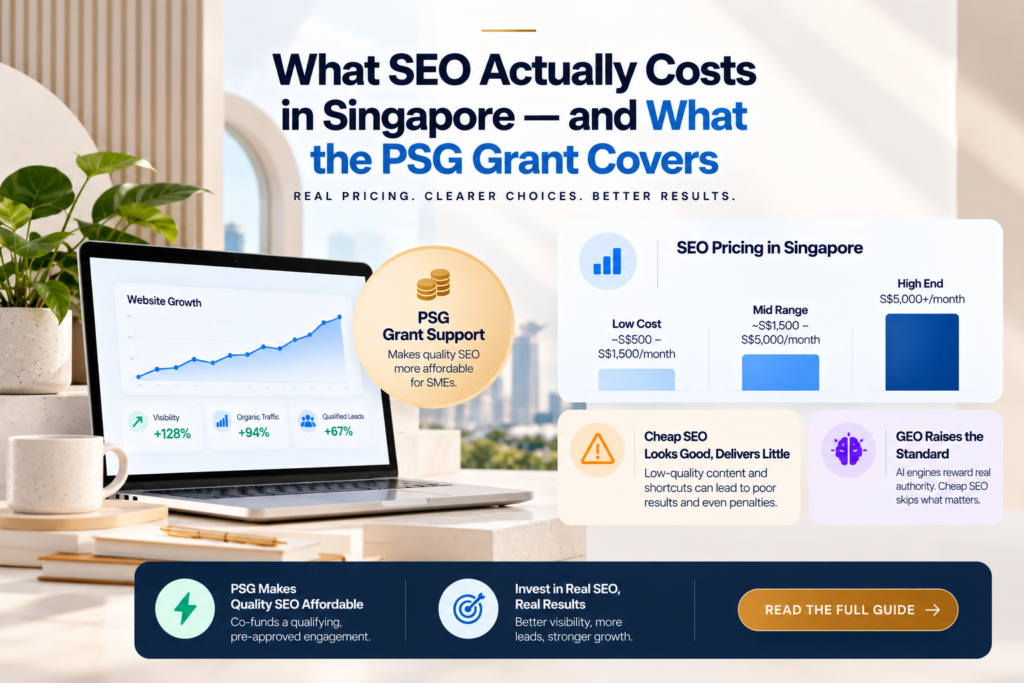 What SEO Actually Costs in Singapore — and What the PSG Grant Covers
 -
 PSG vs EDG: Which Grant Funds Your Marketing?
 -
 PSG Grant 2026: What It Is, Who Qualifies, and How to Claim It
 -
 The 2026 PSG Digital Marketing Grant Guide: SEO, GEO & AEO Explained
Facebook
Twitter
LinkedIn